
 Available in GB
Content
- The Old Machine, Recast for the Online Cabinet
- Three Reels, Lines and the Logic of a Spin
- Choosing a Classic Slot Without an Empty ‘Best Of’ List
- Fruit-Machine Features: Holds, Nudges and Their Modern Company
- A Spin Has a Clock, Even When It Looks Familiar
- Real-Money Play and the Limits Around It
- What ‘UK-Regulated’ Means in Practice
- Free Play as a Way to Learn the Layout
- The Fruit-Slot Family: Familiarity and Variation
- Symbols, Outcomes and the Myth of a ‘Due’ Win
A guide to the reels, symbols and features that connect traditional fruit machines with their online counterparts.
The Old Machine, Recast for the Online Cabinet
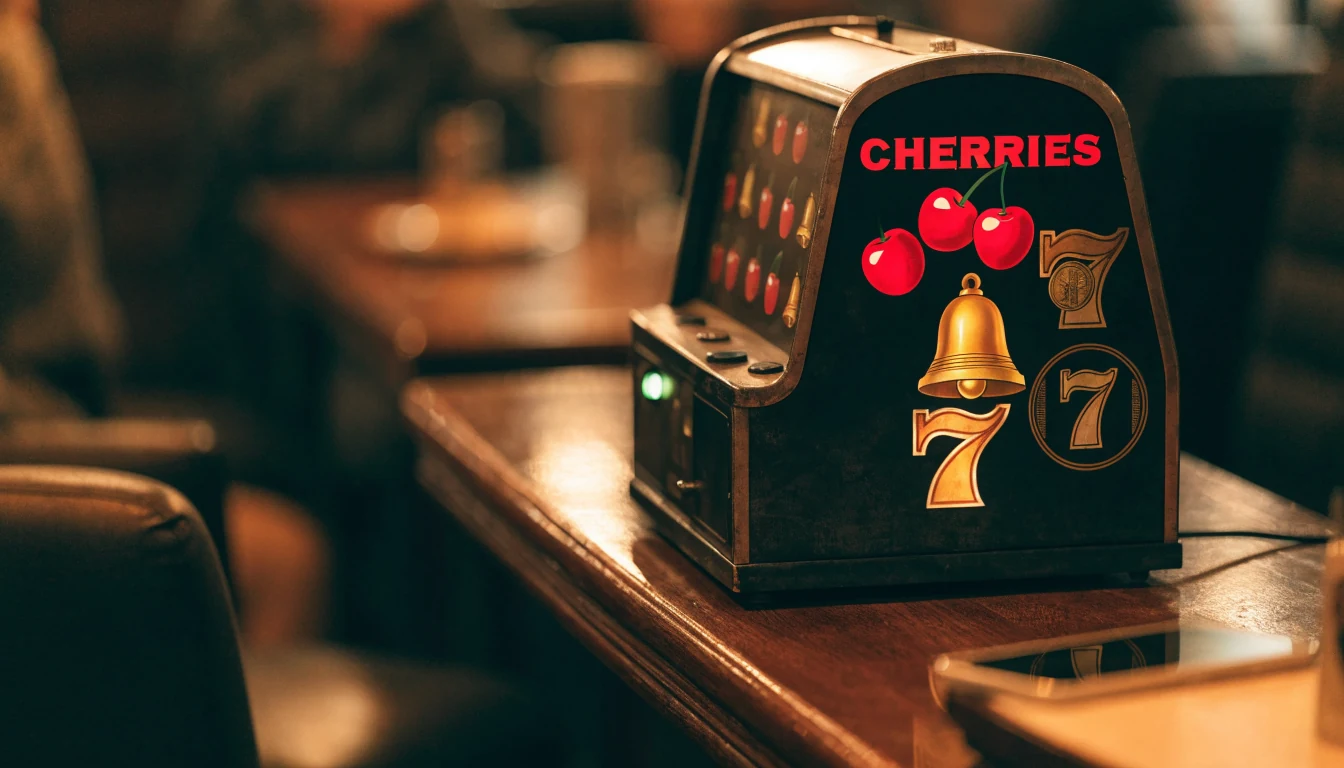
A classic slot is recognisable before its rules are known. Its visual language is compact: a row of reels, familiar symbols, bright colours and the suggestion that a small movement might change the whole picture. Cherries, bells, bars and lucky numbers belong to a shared vocabulary of machine play. The designs vary, but they tend to favour directness over elaborate scenery. There is little need for a story to explain why the symbols matter. The cabinet itself supplies the drama.
That familiarity has survived the move from the public room to the private screen. Online, a classic slot may still resemble the upright machine associated with arcades and pubs, even when the physical cabinet has disappeared. The frame is now a screen; the handle may be a button; the surrounding room is whatever happens to be around the player. Yet the old visual shorthand remains useful. A glance can tell what sort of game this is meant to be.
The phrase “three-reel classic slots” often stands for that whole tradition, though not every classic title uses precisely the same arrangement. What links the category is less a single template than a preference for a recognisable, uncluttered presentation. It is a design that makes the game legible at once. The appeal is partly visual, partly cultural: these symbols have been repeated so often that they arrive with their own small history.
That history is not only about machines. It is also about how gambling became an ordinary presence in shared spaces, where play could sit alongside conversation, a drink or a pause in the day. The online version changes the setting, and with it the scale of choice. A cabinet held a limited collection; an online lobby can bring together a much wider selection of titles. The old form is no longer tied to one machine in one place.
Progressive Slots Online in the UK: How Jackpots Work
For a player, this means that a classic slot can be found at different stakes and at convenient times, rather than only when a particular cabinet is available. That flexibility is one of the clearest changes made by online access. It also makes the category less uniform than its familiar appearance suggests. Two games may share the same bright fruit and simple framing while differing in presentation, pace or available options. The old look is a family resemblance, not a promise that every title behaves alike.
This helps explain why classic slots persist beside newer games with larger themes and more elaborate visual worlds. They do not need to compete by becoming more cinematic. Their restraint is part of the point. A screen full of effects can make a game feel like a small production; the classic format keeps attention close to the symbols and the repeated act of play. It can be modest in appearance and still occupy a considerable place in the market.
The scale is visible in the UK Gambling Commission’s operator data: online slots generated £773 million in gross gambling yield in the reported market figures for January to March 2026. That figure covers online slots, not classic titles alone, and it describes a market rather than the experience of any one player. Still, it offers a measure of how far the screen has carried a form once associated with a single cabinet. Familiarity travels well.
The change is not simply that old machines have been copied onto phones and computers. Online access turns the cabinet into a catalogue, and makes the act of choosing a game part of the experience. The classic slot sits among many alternatives, available at different stakes and at times that suit the rhythms of private life. Its old-world appearance now belongs to a new kind of access: less dependent on a venue, more dependent on a screen.
Online Craps in UK Casinos: What Can Be Verified
That shift has a social edge. A machine once made its presence public; online play can be solitary, tucked into a quiet interval and invisible to anyone outside the room. The form looks familiar, but its surroundings have changed. The symbols remain in view. The crowd does not.
Recommended online casinos
- SlotoSportBonus: 500% up to £ 10 200+ 777 FS · Payout speed: 1-3 business days
- ChanzeBonus: Slots Welcome Bonus #1 200% up to €500 · Payout speed: 1-3 business days
- x3betBonus: Welcome Pack 100% Up to £1.000 + 200 Free Spins · Payout speed: 1-3 business days
- Revery PlayBonus: 100% up to€1,000+ 100 FS · Payout speed: 1-3 business days
- AmunbetBonus: Join now and get 450% up to 2,700 GBP + 450 FS · Payout speed: 1-3 business days
- NightLuckBonus: Welcome Pack + 805% Up To 6400€ + 280 FS · Payout speed: 1-3 business days
- DieselwinBonus: Welcome Pack 250% up to £4000 + 200 FS · Payout speed: 1-3 business days
- SpinFormulaBonus: 550% Up To £15,000 + 550 FS · Payout speed: 1-3 business days
- NightWinBonus: £900 + 400 free spins · Payout speed: 1-3 business days
- EvoSpinBonus: 125% up to €2500 + 125 Free Spins · Payout speed: 1-3 business days
Three Reels, Lines and the Logic of a Spin
The classic slot machine is often reduced to its most recognisable arrangement: reels set side by side, symbols passing through a window, and a line that gives the eye somewhere to look. Online, the cabinet has become a screen, but the underlying question remains plain: which symbols land in the positions that count?
A reel is the vertical column of symbols shown in the game window. A payline is the route across that window on which a matching arrangement may produce a win. In a simple three-reel layout, the route may run straight across the middle. Other games can make the pattern less linear, but the principle is consistent: the game evaluates the symbols in relation to its active lines, rather than treating every visible arrangement as a winning one.
That distinction matters because a screen can show matching symbols without those symbols forming a counted pattern. A pair may sit beside a line, or matching images may appear in positions that the game does not evaluate together. The display invites a quick glance; the rules ask for a more particular reading. A result depends on which symbols the player lines up along the lines that are active.
Penny Slot Machines in the UK: Spin Costs Explained
What an active line does
The number of available paylines and the number in play are not necessarily the same thing. Some slots let players change the number of active lines manually. In that case, the selected lines define which paths are being assessed for that spin. A line left inactive does not become relevant merely because its symbols happen to look promising.
This is a small choice with a clear mechanical effect. The player is not changing the symbols on the reels, but is deciding which alignments the game will count. That is why the payline panel, often tucked near the controls, is part of the rules rather than decoration. A spin cannot be read properly without knowing what is active.
The screen may make this feel more intuitive than it is. Lines can be drawn in colours or shown in a diagram, while the reels offer a moving picture that appears to settle into a result. The graphic is a guide to the arrangement, not a promise that every attractive pattern will be paid. The line has to be active, and the symbols have to meet the game’s stated conditions.
Classic slots online retain the visual economy of the old machine: a bounded set of reels, a compact display and a result expressed through alignment. But the digital version can place the explanation beside the action. Paytable and line information are typically part of a game’s interface, so the logic can be inspected rather than inferred from a cabinet’s lights. Clearer, not necessarily simpler.
From moving reels to a result
The animation of reels stopping is a representation of the outcome, not evidence that symbols are being physically selected by the player’s timing. Some slots use a random generator to determine results. The reels then provide the familiar visual language through which that result is presented: symbols move, positions settle, and the game checks the resulting arrangement against its active lines.
In games using a random generator, the reel animation is a visual representation of the result, not a skill test based on timing.
That separation between result and display is easy to overlook. A spin looks like a sequence, with motion followed by a stop, and the sequence can encourage the impression that the last moment is decisive. In a game using a random generator, however, the animation is the theatre of the machine, not a skill test hidden in the timing. It gives shape to an outcome.
The symbols themselves carry the visible meaning. A fruit, a bell or another familiar image is not inherently a win; its significance depends on the game’s rules and where it appears. The line is the grammar, the symbols its vocabulary. Without the game’s paytable, a row of pictures may be legible as design but not as a result.
For anyone comparing a classic 3-reel slot machine with a more elaborate online format, the reel count is only the beginning of the description. The useful mechanics are the number and shape of the paylines, whether the active lines can be adjusted, and how the game defines a qualifying alignment. Those details explain what a spin is measuring. They do not tell whether a particular game is preferable; that belongs to a different judgement.
This basic structure also explains why a classic slot machine game can look familiar while behaving differently from another title with the same compact layout. One may evaluate a straight line, another may offer several routes across the reels, and some may allow the player to select which routes count. Familiar imagery does not standardise the rules. The paytable does the quieter work.
Elk Studios Casinos in the UK: What Can Be Verified
The old machine made the line visible in metal and glass. The online version makes it a setting and a diagram. In both, the result is not simply “three matching pictures”: it is a defined relationship among symbols, positions and active paylines. The spin is brief. The logic sits underneath.
Choosing a Classic Slot Without an Empty ‘Best Of’ List
A ranking of classic slots can look decisive while concealing the question that matters: best for what? One player may want a familiar fruit-slot atmosphere; another may care more about a clear game screen or a title that runs smoothly in a browser. A list without stated criteria is not much of a guide. It is a row of preferences dressed as a verdict.
Comparisons become more useful when they separate the game from the place hosting it. A classic slot can be considered for its presentation, the clarity of its information and whether its general style suits the intended session. A casino can be considered for how readily its catalogue can be searched, how clearly it presents game information and whether the experience works on the device being used. These are practical questions, not promises about how a game will pay.
That distinction matters because familiarity can give a game an undeserved air of predictability. A recognisable cabinet style may make the play feel legible, but it does not make outcomes easier to anticipate. Licensed sites use Random Number Generators (RNGs), so each spin is independent and unpredictable. A favourite title is still a matter of taste, not a method for forecasting results.
Do
- Evaluate the clarity of the game screen
- Check if the layout is usable on your device
- Use demo versions to learn the controls
Don’t
- Rely on “best of” lists without criteria
- Assume a familiar style makes outcomes predictable
- Treat bonuses as simple extensions of the game
Compare the experience, not a mythical winner
When weighing the best classic slots to play online, it helps to start with the qualities that can actually be observed. Is the display easy to read? Are the game’s instructions and available options presented plainly? Does the layout remain usable on the screen where it will be played? These details shape the experience without implying that one title is objectively superior.
The same approach applies to choosing among classic slots casinos. A large catalogue is useful only if it can be navigated; a familiar game name is useful only if the relevant version is available in the lobby. Search and category tools can make a collection easier to browse, while a responsive web version can matter to people who do not want to install an app. The sensible comparison is between what the site actually presents and what a player values, not between promotional adjectives.
Game information deserves attention before money enters the picture. A demo version can help establish where the controls are and what the screen displays, without wagering. It can also reveal whether the pace and presentation feel comfortable. Setting a deposit or time limit is a recommended boundary for play, rather than a feature that makes any casino or slot inherently better.
“Best classic slots casino UK” is therefore not a stable category with one answer for everyone. The shortlist may change with the titles available, the clarity of the lobby and the player’s own preferences. A casino’s promotional language cannot settle that question. Nor should a bonus be treated as a simple extension of a game: offers may carry wagering conditions, and eligibility can depend on the offer’s terms. The attractive headline is the least informative part.
Real-money access changes the comparison
For classic slots for real money, the casino is part of the decision, not merely a doorway to the game. The overall presentation, the ability to locate relevant information and the availability of account tools all shape how the experience is managed. A neat-looking lobby is not evidence of favourable outcomes, just as an untidy one does not alter a slot’s underlying randomness.
Amatic Online Casinos in the UK: Provider and Licensing
The choice between free classic slots with no download and paid play is also not a question of which version predicts a better result. Browser-based demos can offer a way to learn a game’s layout and features before wagering; real-money play adds financial consequences. The distinction is plain, though advertising often works hard to blur it. A demo is for familiarity, not a promise about what will happen after a deposit.
A useful comparison can be kept modest: identify the kind of classic slot that appeals, inspect how clearly the game and casino are presented, and consider whether the site’s tools support a bounded session. Then separate that assessment from expectations about winning. The first concerns convenience and preference; the second cannot be settled by a ranking.
There is no need to force a “best” label onto every title or casino. Some readers may prefer a spare, traditional presentation; others may want a broader choice or a more adaptable screen. Those are legitimate differences. A list that admits its criteria can help; a list that hides them merely borrows the authority of a heading.
In the end, the best online classic slots casino is not a universal champion but a setting whose catalogue, presentation and practical tools fit the player’s needs. The game remains unpredictable within that setting. Familiarity is not foresight.
Fruit-Machine Features: Holds, Nudges and Their Modern Company
The appeal of a classic slot is often described through its familiar appearance, but a game’s character also comes from what it lets happen after a spin. Holds & nudges belong to that older vocabulary of fruit machine games: small interventions that make the machine feel less like a picture changing and more like a device with a temperament. Online, those features survive, though not in a standard package. Their presence and conditions depend on the title.
A hold feature can let a player keep selected symbols in place while the remaining reels take another turn. A nudge can move a reel’s displayed position by a step. The terms are compact; the rules behind them are not necessarily. One game may offer several holds or nudges during a single spin, while another may make them available only when particular conditions are met. Some titles may offer neither. Familiar names, different arrangements.
iSoftBet Casinos in the UK: What Can Be Verified
That variation matters more than the feature’s mere presence in a description. A label such as “nudge feature” says little about when it appears or what choices accompany it. The feature belongs to the game’s own rules, not to a universal fruit-machine code. Two classic casino slot games can share the same broad visual language and still ask for different kinds of attention. One makes a small decision prominent; another keeps the player watching for a particular opportunity.
This is where online versions alter the old machine’s atmosphere without necessarily abandoning its grammar. The cabinet once made its controls physically legible: buttons, a screen, a brief pause. A digital game places the controls within a designed interface, where holds and nudges may be presented alongside other features. The player is not dealing with a single machine’s hardware but with a software interpretation of it. The old vocabulary remains, but the accent varies.
Other features widen that vocabulary. Wild symbols can stand in for other symbols within a game’s rules, while free spins create a separate run of play without requiring a fresh paid spin for each turn in that sequence. Pick-style mini-games may interrupt the familiar reel display with a choice-based bonus feature. These elements do not make every classic slot feel modern in the same way. They can add a short detour, a different decision, or simply another visual layer.
There is a small cultural distinction here. The old fruit machine suggested a handful of controls and a clearly bounded encounter; online versions can gather a whole collection of optional features around that familiar surface. Yet more features do not automatically make a game more engaging or more generous. They make its rules more particular. A bonus round may be a change of scene, not evidence that the game has become easier to read.
Descriptions can also flatten meaningful differences. A list that says a title has holds, nudges, wilds and free spins can sound like a checklist, as if each item worked identically from one game to the next. It does not. The feature’s trigger, presentation and place in the game belong to the individual title. Even the same named mechanic can feel quite different when its availability is conditional or when several opportunities appear in one spin.
Quickspin Casinos in the UK: What Can Be Verified
That is why the on-screen explanation deserves attention before play. It sets out what a feature means in that particular game, rather than relying on an assumption carried over from another fruit machine. The names are familiar; the terms of use are local. This is not a grand mystery, merely the ordinary difference between a genre convention and a game rule.
The surrounding interface may include quick-spin options or compatibility with mobile devices, but these are conveniences of presentation, not holds or nudges themselves. Nor should autoplay be treated as a normal way to use a British online slot: it is banned. The distinction matters because a feature list can mingle game mechanics with interface functions, leaving the impression that they all belong to the same kind of choice. They do not.
A classic fruit slot game can therefore be traditional in its look and varied in its behaviour. Holds & nudges may be central, conditional or absent; wilds, free spins and pick-style mini-games may appear in different combinations. The family resemblance is real, but it is not a rulebook. Each title has its own small machinery of permissions and surprises. The labels only open the door.
A Spin Has a Clock, Even When It Looks Familiar
The familiar rhythm of a fruit machine can suggest that a spin begins and ends as quickly as a button can be pressed. Online, that rhythm has a boundary. In Britain, each online slot spin must last at least 2.5 seconds. The rule gives every game cycle a minimum duration, even when the screen is simple and the animation brief.
That pause changes the texture of play. A reel may stop, symbols settle, and a result appear; then there is a moment before another spin can complete. The delay is not a hint about what might happen next. It is part of how online slots are paced, not a signal that a win is approaching or that a loss is being balanced.
Autoplay is banned for online slots in Britain. A game therefore cannot be set to launch a sequence of spins without a fresh action for each one. That does not make the activity slow by nature: the interface may still offer quick-spin options, which alter the presentation, but they cannot remove the required minimum duration. The distinction is small on screen and substantial in principle. One feature speeds the visual impression; the other would hand the sequence over to the machine.
Autoplay Ban
Autoplay is banned for online slots in Britain; every spin requires a fresh action from the player.
A classic slot online can retain the brisk, repetitive feel of its mechanical ancestor while being subject to rules built for digital play. The cabinet has disappeared, but the question of pace has not. A physical lever once made the player’s action visible; a screen button compresses that gesture into a tap. The rules put some space back into the cycle.
Nor does a quicker tap or a larger bet improve the chance of a favourable random result. Timing and betting size do not influence random outcomes. This is worth keeping separate from the pace of the interface: a spin may feel faster, slower or more dramatic, while its chance of success is not being steered by the player’s rhythm.
In practice, the experience of playing a classic slot is a sequence of deliberate starts rather than a stream the game can run on its own. The pause may be brief, but it interrupts the easy illusion that repetition creates momentum. Each spin remains its own event, and the next one waits for an action. A small brake.
Real-Money Play and the Limits Around It
Real-money classic slots are not simply a matter of opening a game and choosing a stake. Online gambling accounts are subject to age and identity checks, and the threshold is clear: a player must be at least 18 to gamble online. Operators verify a customer’s age and identity when the account is created. These checks place a small administrative pause between curiosity and play; money is not meant to move first and questions follow later.
Pragmatic Play Casinos in the UK: Licensing and Games
That pause reflects a basic distinction between a game displayed on a screen and gambling with funds. An account ties play to an identified customer, rather than leaving the transaction anonymous. It is an ordinary feature of the system, though not always the part that attracts attention. The reels are more decorative.
A separate limit applies to online slots in Great Britain. Under the current limit stated in regulatory guidance, customers aged 25 and over may stake no more than £5 per game cycle. The limit concerns the stake for a cycle, not a promise about the amount that might be won, nor a measure of how often a game pays. It applies to online slots; it should not be casually transferred to every casino game.
For someone considering real-money classic slots in the UK, these conditions shape the point at which play begins: the account must pass age and identity verification, and the permitted stake has a defined ceiling for older adults. They are not features of an individual title. A familiar fruit symbol does not alter the account checks, and a vintage-looking cabinet on screen does not place the game outside the rules.
The distinction between stake and outcome matters. A cap limits what can be put at risk in a game cycle; it does not make a session predictable or turn a slot into a safer bet by design. The practical boundary is real, but narrow. Rules can set the terms of entry and the size of a stake. They cannot settle what the next spin will show.
Stake Limits
Customers aged 25 and over in Great Britain may stake no more than £5 per game cycle on online slots.
What ‘UK-Regulated’ Means in Practice
The phrase “UK-regulated” can make a border look simpler than it is. The UK Gambling Commission oversees gambling activity across the United Kingdom, including online casinos, but its stated remit for remote gambling is specifically tied to services offered to consumers in Great Britain. The location of the equipment running a casino does not, by itself, remove that activity from the Commission’s reach.
That matters to online play because the visible casino may be a website, while the business and the technical machinery behind it can sit elsewhere. For remote gambling offered to people in Great Britain, the regulator’s concern follows the service into that arrangement. Geography has not become irrelevant; it has simply ceased to be a reliable shortcut for deciding who is responsible.
Within Great Britain, the Commission is the sole regulator of commercial gambling. That is a narrower claim than saying one body governs every aspect of every form of gambling throughout the UK. The distinction is useful: “UK” is common shorthand in casino language, while the regulatory description of remote services often turns on Great Britain.
The Commission’s licensing work covers both organisations and people. Businesses receive operating licences, while individuals working in relevant roles may need personal licences. The two kinds of permission address different parts of the same trade: the company providing gambling and the people whose work falls within the licensing system.
A classic slot UK casino is therefore not defined as regulated merely by its familiar fruit symbols, polished interface or British branding. The relevant question is whether the gambling activity falls under the Commission’s remit and the business holds the appropriate operating permission. That framework is less theatrical than the cabinet. It is also the part that gives the word “regulated” its practical meaning.
Free Play as a Way to Learn the Layout
A free-play version can make a classic slot easier to read before money is involved. Where a demo is available, it lets a player move through the game’s screens and notice how its features are presented without wagering. The point is familiarity, not rehearsal for a guaranteed result: a practice session cannot make a later spin more predictable.
That distinction matters because the first encounter with a game often carries small uncertainties. Where are the paytable and settings? What does a feature look like when it appears? A demo can answer such questions at the pace of exploration, without the pressure of a real-money session. It is a modest use of free play, but a useful one: learning the layout rather than imagining that a run of practice has somehow mastered chance.
The format varies. Some games offer a demo directly; others may not, so free access should not be treated as a standard feature of every title. Nor does an attractive practice mode establish that the same game is eligible for a particular promotion. Those are separate matters.
Free play also has edges. It can become an invitation to continue rather than a brief orientation, especially when the game makes another spin effortless. Deposit or time limits can give a real-money session a boundary before it begins. Setting one is a practical way to keep the activity within chosen limits, rather than deciding how long to play in the middle of play.
A demo is therefore best understood as a map of the interface, not a forecast. It can show what the game contains and how its controls are arranged. It cannot turn chance into a skill test, or make money at risk feel like money already won. Familiarity is useful. Certainty is not on offer.
The Fruit-Slot Family: Familiarity and Variation
Fruit symbols give this corner of the classic-slot family its instantly recognisable look. Their appeal lies partly in a visual language that asks little of the player: cherries, lemons and other familiar emblems make the machine legible at a glance. Yet a shared appearance does not mean every title behaves alike. The cabinet may look reassuringly familiar; the rules beneath its display belong to the individual game.
That difference is especially visible in holds and nudges. One online fruit machine game may offer several opportunities to hold or nudge symbols during a spin, while another may make such an option available only when particular conditions are met. Some titles may offer neither in the same way. The feature is not a promise attached to the fruit-machine label; it is part of that game’s own design.
This variation matters because the old-fashioned look can encourage an assumption of sameness. A row of fruit symbols may recall a familiar format, but it does not establish which choices are available or when they appear. Those details have to be read in the rules for the specific title, rather than inferred from its theme.
The category, then, is less a single template than a family resemblance. Visual cues carry the tradition forward, while the details of holds and nudges distinguish one game from another. Familiarity is real. Uniformity is not.
Symbols, Outcomes and the Myth of a ‘Due’ Win
Classic slot machine symbols make an outcome legible at a glance. Their familiar pictures turn a result into a small tableau: symbols appear together, and the arrangement either qualifies for a win or does not. The images may feel more expressive than the underlying event. A row can look deliberate, almost like a message. It is still the alignment that matters.
A slot’s winnings depend on which symbols are lined up. That gives the symbols a practical role, but not a memory. A near-match may invite the thought that the game was close to paying, while a winning combination can make another win seem newly likely. Neither interpretation follows from the pictures. They describe the result already displayed, not a promise about what comes next.
The old language of luck tends to turn sequences into stories. A run of losses becomes a machine “holding back”; a win becomes evidence that it is “hot”. Such phrases belong to the human habit of finding intention in repetition. They may make a session easier to narrate, but they do not explain how a regulated online game produces its next result.
On regulated online games, previous wins and losses do not alter the probability of the next spin. Each result stands apart from the history a player can see on screen. The symbols from the last outcome may remain vivid in memory, but they do not lean on the next one.
That distinction matters because familiar pictures can make chance seem personal. The display gives shape to an outcome; it does not reveal a pattern of favour or debt. A machine owes nothing. A spin has no recollection.
Are there age restrictions to play online fruit machines?
Yes. You must be at least 18 to gamble online, and operators check your age and identity when you register.
Are online fruit machine games fair?
Licensed sites use random number generators, making each spin independent and unpredictable. Previous results, timing and bet size do not affect the next spin.
What are the online slot stake limits in Great Britain?
For customers aged 25 and over, online slots are capped at £5 per game cycle. This limit does not apply to roulette or blackjack.