
 Available in GB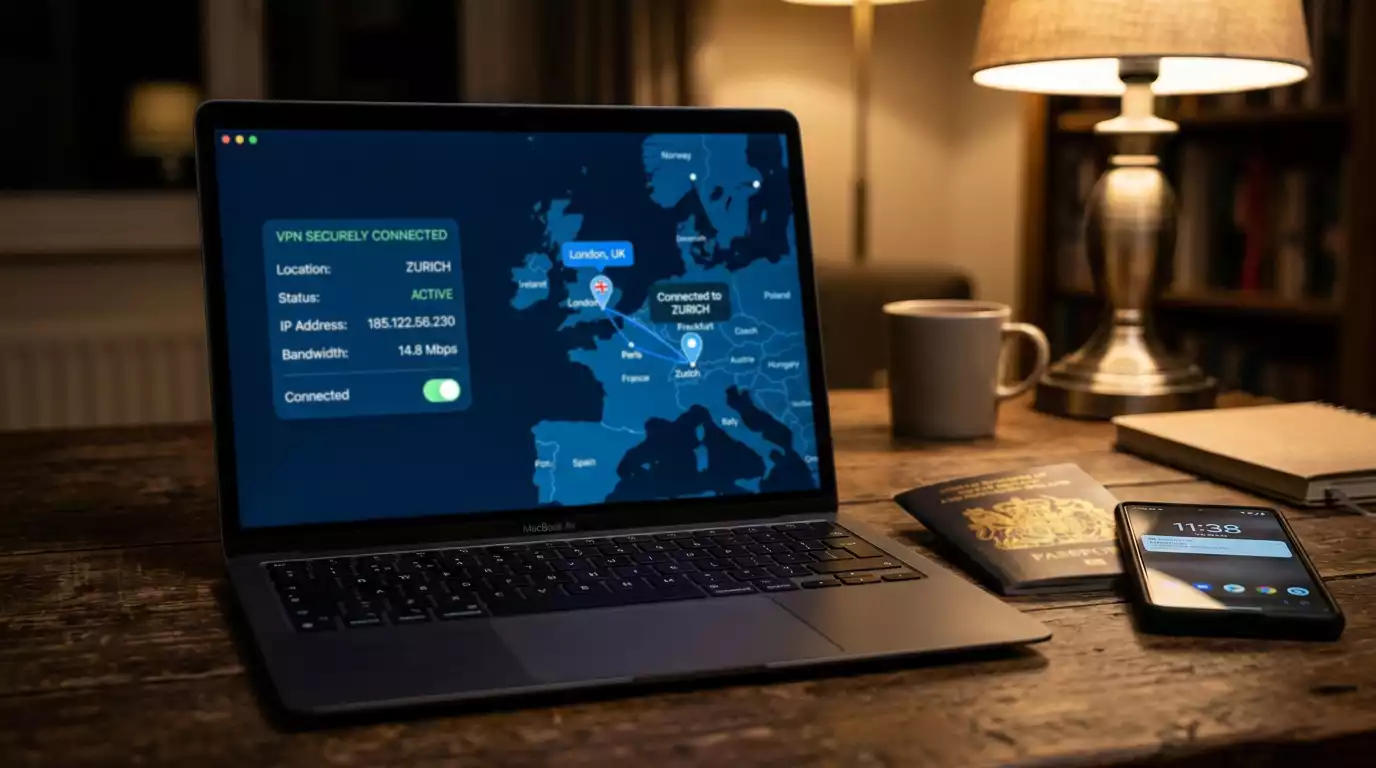
Content
VPN Use at Online Casinos — The UK Player Perspective
Every few weeks someone emails me a variation of the same question: “I used a VPN to sign up at Nine Casino — can they take my money?” The short answer is yes, they can. The longer answer involves the intersection of contract law, platform terms, UK gambling legislation and the practical reality of how offshore operators handle detected VPN use. None of it works in the player’s favour.
VPN usage among UK online gamblers sits at approximately 5.8%, according to industry tracking data. That is not a trivial number. It represents hundreds of thousands of players who are masking their location to access platforms that either restrict or do not officially serve the British market. The motivation varies — some want access to higher stake limits unavailable at UKGC sites, others want games or bonuses not offered domestically, and some simply prefer the perceived privacy. Whatever the reason, the risks are consistent and worth understanding before committing funds to an account built on a masked IP address.
Nine Casino’s Terms of Service on VPN and Location Masking
The terms of service at most Curaçao-licensed casinos, Nine Casino included, contain clauses that prohibit the use of VPNs, proxy servers and other location-masking technologies. The typical language grants the operator the right to void winnings, confiscate deposits and close accounts where the player’s true location differs from the location presented during registration or play.
These clauses are broad by design. They give the operator maximum discretion without specifying the exact detection methods or thresholds that trigger enforcement. A player who registers with a VPN exit node in Malta, deposits using a UK-issued debit card and uploads a UK driving licence for KYC has created a trail of contradictions that the operator can invoke at any point — immediately, months later, or specifically when a large withdrawal is requested.
The timing of enforcement is the crux of the problem. Operators rarely block VPN users at deposit. The funds flow in without friction. Detection and enforcement tend to surface at withdrawal, when the operator’s compliance team reviews the account more carefully. I have seen cases where players deposited and played for months without issue, only to have their first significant withdrawal request trigger a review that uncovered the VPN usage and resulted in account closure with funds confiscated. The operator’s position is straightforward: the player violated the terms, therefore the operator is entitled to enforce its contractual remedies. What the account terms allow: the registration rules.
UK Law on VPN Use for Gambling: What’s Actually Illegal
Here is where the legal picture is more nuanced than most discussions suggest. Using a VPN is not illegal in the UK. Using a VPN to access an offshore casino is not a criminal offence under British law. The Gambling Act 2005 places the regulatory burden on the operator, not the player. An unlicensed operator offering services to UK residents is the party in violation — the player accepting those services is not committing a criminal act.
That said, “not illegal” does not mean “protected.” The absence of criminal liability does not create civil rights. If Nine Casino closes your account and retains your balance because you used a VPN, UK courts have no jurisdiction over a Curaçao-licensed entity, and the Curaçao Gaming Authority’s dispute resolution process is your only formal recourse. The UKGC cannot intervene because the operator does not hold a UK licence. You are, in practical terms, relying entirely on the goodwill and internal policies of an entity that has already identified you as having breached its terms.
There is a related legal consideration around fraud. If you provide false information during registration — for example, selecting a country of residence that is not your actual country — that misrepresentation could theoretically be characterised as obtaining services by deception under the Fraud Act 2006. In practice, I am not aware of any UK prosecution of a player on this basis, and the threshold for criminal fraud requires intent and financial harm that would be difficult to establish in a gambling context. But the theoretical exposure exists, and it is worth noting for completeness. The full assessment is in our Nine Casino review.
Account Freezing, Voided Winnings and Withdrawal Blocks
The practical consequences of detected VPN use follow a predictable escalation. The first step is usually account suspension pending review. You log in one day and find your account frozen with a message directing you to contact support. The support conversation begins with a request for additional documentation — proof of address, source of funds, identity verification — followed by questions about your geographic location and connection history.
If the review confirms VPN use from a restricted territory, the outcome typically falls into one of three categories. The best case: the operator allows you to withdraw your original deposits minus any losses, with bonus funds and winnings voided. The middle case: the operator closes the account with all funds confiscated, citing terms of service violations. The worst case: the operator takes no action for weeks, leaving your funds in limbo while you have no ability to play, withdraw or escalate effectively.
The Curaçao Gaming Authority, following its 2024 LOK reform, has strengthened its complaint process. Players can file formal complaints through the regulator, and operators are required to respond. However, the regulator’s track record on individual player disputes — particularly those involving admitted terms violations — does not strongly favour the complainant. The 741 cease-and-desist orders and 1,134 site blocks the CGA coordinated in 2025-2026 demonstrate enforcement activity at the operator level, but individual fund recovery cases operate on a different and slower track.
My consistent advice on this topic is straightforward: if you need a VPN to access a casino, that casino is not designed for your market. The inconvenience of the access barrier is not the problem — it is the warning. Playing at platforms that accept your actual location, whether UKGC-licensed or offshore operators that openly serve UK players without requiring masking, eliminates the foundational risk that a VPN-dependent account carries. The registration process should be completable from your real IP address and with your real documentation, or the account is built on a fault line that can shift at the operator’s convenience.
Can Nine Casino detect VPN usage?
Yes. Offshore operators use a combination of IP analysis, connection pattern monitoring, payment method geolocation and KYC document review to identify VPN users. Detection may not be immediate — it often surfaces during withdrawal processing when accounts receive closer scrutiny. A UK-issued payment card combined with a non-UK IP address is one of the most common detection triggers.
Is it illegal to use a VPN to gamble at Nine Casino from the UK?
Using a VPN to access an offshore casino is not a criminal offence under UK law. The Gambling Act 2005 places regulatory obligations on the operator rather than the player. However, VPN use violates most operators’ terms of service, which gives the platform grounds to void winnings and close your account. The absence of criminal liability does not protect your funds.
What happens to my balance if Nine Casino detects my VPN?
Outcomes vary but typically include account suspension, a review process and potential confiscation of winnings. Some operators allow withdrawal of original deposits while voiding bonus funds and winnings. Others confiscate all funds. The operator’s terms of service grant broad discretion in these situations, and dispute resolution through the Curaçao Gaming Authority is the primary escalation path.