
 Available in GB
Content
- Cardano Casinos and the UK Licensing Divide
- What a UK Cardano Casino Comparison Can—and Cannot—Establish
- Online Casinos, Slots and the Limits of the Evidence
- Playing with ADA: The Boundary Between UK Rules and Offshore Gambling
- Accepting Cardano: A Payment Claim That Needs Verification
- ADA Casinos in the UK: What the Comparison Can Honestly Say
- Claims About Top Cardano Sites and the Missing Evidence
- Bonuses and Payouts: Why Bitcoin Cash Terms Do Not Verify ADA Offers
- No-KYC Cardano Casinos and the Limits of Offshore Checks
- ADA Crypto Casinos: Transactions, Traceability and Tax Claims
The comparison explains the UK licensing divide and why claims about ADA deposits, bonuses, payouts and offshore checks need independent verification.
Cardano Casinos and the UK Licensing Divide
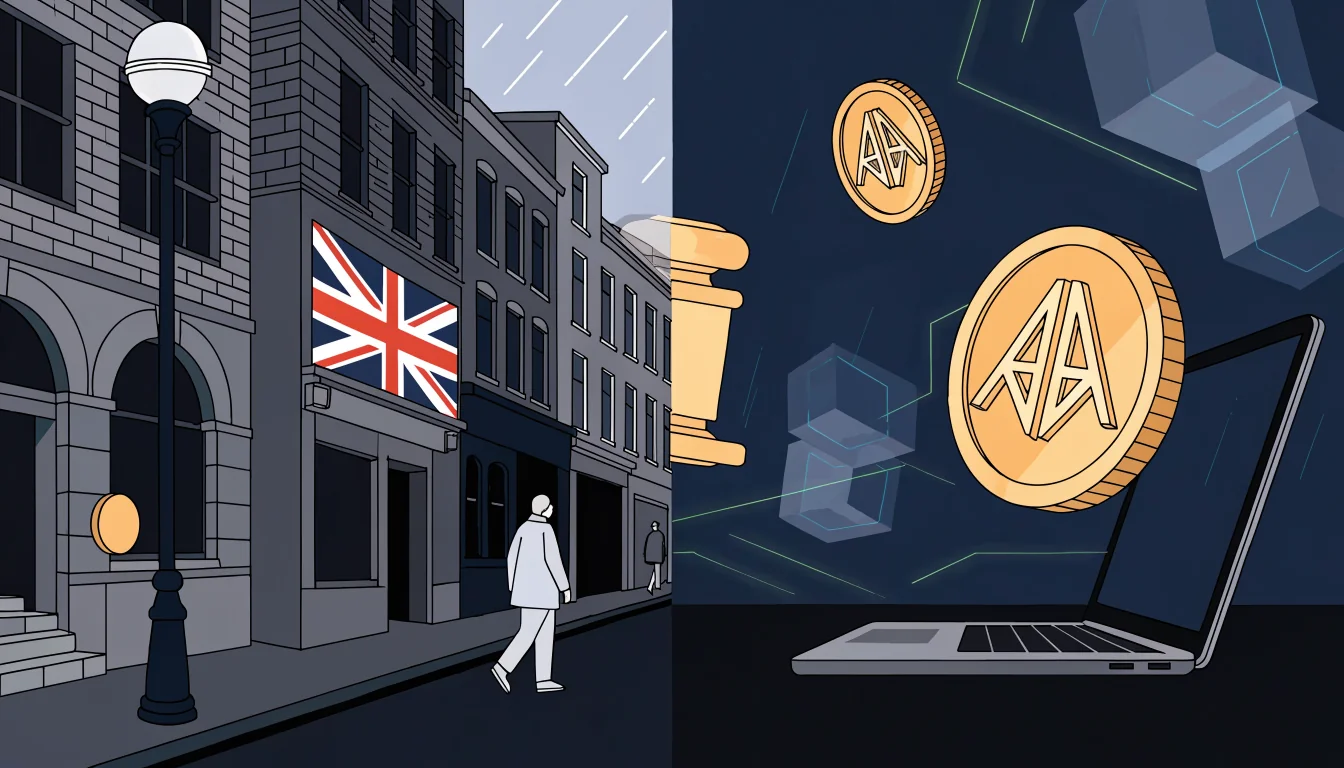
The phrase “Cardano casino” sounds as though it names a distinct corner of online gambling: a casino where ADA, the native cryptocurrency of the Cardano network, is part of the arrangement. But the payment label does not settle the more consequential question of which rules govern the operator. In Britain, the dividing line is not between one digital coin and another. It is between gambling businesses licensed by the UK Gambling Commission and sites operating outside that system.
A UK-licensed casino cannot accept cryptocurrency. That prohibition applies to ADA just as it does to other cryptoassets: an operator cannot make a licensed gambling account a place to deposit digital currency simply by describing the payment method as a feature. A site that advertises Cardano deposits is therefore not offering that feature under a UK Gambling Commission casino licence. The distinction matters more than the novelty of the payment rail.
The Commission regulates commercial gambling in Great Britain, including remote casino gambling offered to consumers there. Its reach does not depend on where a company keeps its servers or other key equipment. A business cannot avoid the British licensing requirement merely by placing its technical infrastructure elsewhere while offering gambling to people in Great Britain. The regulator is the sole authority for commercial gambling in Great Britain, issuing operating licences to businesses and personal licences to individuals working in relevant roles.
TRON TRX Casino Comparison for the UK
That system reflects a particular public choice. Gambling is treated not simply as a private exchange between a player and a company, but as an activity whose operators must answer to a domestic regulator when serving the local market. The licence attaches to the business and its conduct, not to the vocabulary of its payment page. Calling a site an ADA casino does not move it into a separate legal category.
The practical consequence is a split that can be obscured by polished branding. A licensed operator belongs within the UKGC framework but cannot accept cryptocurrency. An offshore casino may advertise ADA as a deposit option, yet it does not thereby acquire a UKGC licence or enter the Commission’s regulatory system. A foreign licence, where a site has one, is not the same thing as permission to offer remote gambling to consumers in Great Britain.
This is why “Cardano casinos UK” can describe two different things in ordinary speech. It may mean a casino licensed in Britain that accepts ADA; that combination is incompatible with the cryptocurrency prohibition. Or it may mean an offshore casino accessible from Britain that promotes ADA payments. The latter sits outside the domestic licensing framework. The word “UK” in a page title, currency selector or marketing claim does not transform the operator’s status.
The distinction is not a technicality. A UKGC-licensed operator is accountable within a defined regulatory system. An offshore site is not part of that system, so players there do not have the UKGC regulatory safety net, UKGC dispute resolution or GamStop integration. A site’s own customer-service process, or a licence issued elsewhere, is not a substitute for those protections. Access to a website and the status of its operator are separate matters.
Casino Not on GamStop: Instant Withdrawal Explained
Nor does the location of a company’s equipment provide a loophole. Remote gambling offered to consumers in Great Britain remains within the Commission’s remit even when the equipment used to run it is abroad. The rule is directed at the commercial service reaching the market, rather than at the physical address of a server. Offshore operators may sit beyond the UKGC system in practice, but that does not make a UKGC licence irrelevant to the question of whether they are licensed to serve the market.
There is also a geographic precision worth keeping. The Gambling Act 2005 governs gambling in England, Wales and Scotland, while Northern Ireland has a different legal framework. In the British market, however, the Commission is the central licensing authority for commercial gambling. “UK casino” is common shorthand, but the licensing rules should not be blurred into a claim that every part of the United Kingdom has an identical gambling regime.
The language of “best” or “top” Cardano casinos can make the choice sound like a contest among comparable businesses. Yet licensing status changes the terms of comparison before any question of interface, games or payment speed arises. One category is regulated domestically and cannot take ADA; the other may promote ADA but stands outside the UKGC framework. They are not two versions of the same product.
Licensing Divide
A UKGC-licensed casino cannot accept cryptocurrency, including ADA. Any site offering Cardano deposits operates outside the UK Gambling Commission’s regulatory system.
A payment method can be novel. The jurisdiction is not.
Recommended online casinos
- SlotoSportBonus: 500% up to £ 10 200+ 777 FS · Payout speed: 1-3 business days
- ChanzeBonus: Slots Welcome Bonus #1 200% up to €500 · Payout speed: 1-3 business days
- x3betBonus: Welcome Pack 100% Up to £1.000 + 200 Free Spins · Payout speed: 1-3 business days
- Revery PlayBonus: 100% up to€1,000+ 100 FS · Payout speed: 1-3 business days
- AmunbetBonus: Join now and get 450% up to 2,700 GBP + 450 FS · Payout speed: 1-3 business days
- NightLuckBonus: Welcome Pack + 805% Up To 6400€ + 280 FS · Payout speed: 1-3 business days
- DieselwinBonus: Welcome Pack 250% up to £4000 + 200 FS · Payout speed: 1-3 business days
- SpinFormulaBonus: 550% Up To £15,000 + 550 FS · Payout speed: 1-3 business days
- NightWinBonus: £900 + 400 free spins · Payout speed: 1-3 business days
- EvoSpinBonus: 125% up to €2500 + 125 Free Spins · Payout speed: 1-3 business days
What a UK Cardano Casino Comparison Can—and Cannot—Establish
A comparison of casinos that claim to take Cardano needs to distinguish a currency-specific fact from a broader conclusion. Evidence about Bitcoin Cash may help explain what a payment check looks like, but it cannot establish that a casino accepts ADA, that an ADA deposit works, or that the terms attached to one currency apply to another. Similarity between two cryptocurrencies is not proof of similarity between casino payment arrangements.
The distinction matters because payment methods are not abstract features. A casino may display a coin in a list, route deposits through a processor, or support it only under particular account conditions. Each claim concerns the named asset and the operator making it. A comparison that transfers details from Bitcoin Cash to Cardano would turn an observed fact about one currency into an unsupported statement about another.
The public record offers a narrow, useful reference point: the Gambling Commission’s register of remote casino licences does not show Bitcoin Cash as a deposit option for any listed operator. That is a finding about BCH and the entries on that register. It does not establish whether a particular offshore casino takes ADA, nor does it settle whether a Cardano payment claim is current or functional. The boundary is simple. The record says what it records.
BNB casino comparison in the UK: licensing and risks
This also limits what can be said about the “best” Cardano casino. A ranking requires comparable information about the same subject: which operators accept ADA, what conditions govern deposits and withdrawals, and whether those conditions can be checked. A rating based on BCH transaction speed or BCH casino terms would not answer those questions. It would describe a different payment method and invite the reader to mistake proximity for evidence.
The same caution applies to bonuses. A promotion attached to a Bitcoin Cash casino does not demonstrate that the operator offers the same bonus to Cardano users. Even where a casino advertises several currencies, the currency-specific terms may matter. An offer’s eligibility, wagering conditions and withdrawal rules cannot be inferred from a different coin’s promotion. The word “crypto” is a category, not a contract.
There is a broader habit at work here. Digital currencies are often grouped together as if their shared technological label made their practical use interchangeable. In a casino, however, the relevant details are set by the operator: what it accepts, how it credits a deposit and what rules attach to the resulting balance. A comparison becomes meaningful only when it keeps those details tied to the asset and site actually being assessed. Otherwise, neat tables can conceal a loose chain of reasoning.
A careful comparison can still be useful without pretending to settle more than it does. It can identify which statements are specific to ADA, distinguish them from observations about BCH, and avoid treating a casino’s general cryptocurrency language as confirmation of a particular payment route. It can also separate a claim that a site accepts Cardano from proof that the claim is supported by current, operator-specific information.
Do
- Verify claims using Cardano-specific evidence
- Keep payment details tied to the actual asset assessed
- Distinguish between a coin’s category and its specific contract
Don’t
- Use Bitcoin Cash data to prove ADA acceptance
- Infer ADA bonus terms from other crypto promotions
- Treat general cryptocurrency language as proof of a specific payment route
That is not a technical quibble. A deposit method affects the point at which a player commits funds, while a promotional term affects what can be withdrawn and under what conditions. When those details are attributed to the wrong currency, even an otherwise polished comparison may give a false impression of certainty. The sensible standard is not to fill every blank with a nearby fact, but to keep the edges of each claim visible.
A Cardano comparison can therefore assess Cardano claims only when they are supported as Cardano claims. Bitcoin Cash provides a limited comparison point, including the regulator-register finding, but it cannot stand in for ADA. Similar names, shared crypto branding and overlapping casino language do not make the evidence interchangeable. The distinction is less exciting than a ranked list. It is also more honest.
Online Casinos, Slots and the Limits of the Evidence
An online casino is a collection of games, payment arrangements and rules presented through one account. “Cardano” or “ADA” in a casino’s description points to a claimed way of funding that account; it does not identify a particular slot, establish that a game can be played with ADA, or show that the casino is authorised to serve people in Britain. Those are separate claims, and they should not be made to carry one another.
The distinction matters because a casino can display familiar slot imagery while operating beyond the rules that govern licensed gambling in Britain. For remote gambling offered to consumers in Great Britain, the UK Gambling Commission requires the operator to hold the relevant licence, wherever its key equipment is located. A site’s use of “online casino” or “slots” is not itself proof of that status. Nor does a cryptocurrency label change the rules applying to a licensed operator.
Casinos That Accept Bitcoin in the UK: What to Check
For licensed online slots, the rules shape the experience in specific ways. Autoplay is banned in Britain, and each slot spin must last at least two and a half seconds. The maximum stake per game cycle is £5 for customers aged 25 and over; for those aged 18 to 24, it is £2. The £5 limit for all adults took effect on 9 April 2025. These are rules of the licensed market, not descriptions of how an offshore Cardano site behaves.
That distinction is easy to lose in promotional language. A page might use “ADA slots” to mean ordinary casino games available after a crypto deposit, or it might imply a special catalogue of games built around Cardano. The phrase alone settles neither meaning. A game title, its provider and its availability require their own confirmation; a payment claim cannot stand in for those details. No slot names or providers can responsibly be attached to a Cardano offer without evidence tying them to that offer.
The word “best” adds another layer of judgement. A ranking would need a stated basis: perhaps game selection, terms, licence status or some other measurable feature. A list that simply places casino names beside the word “Cardano” would not demonstrate that the sites accept ADA, offer particular slots or meet British licensing requirements. It would only make the claim look more settled than it is.
Licensed operators also have obligations that are less visible than a game lobby. They must check a customer’s age before allowing a deposit, and new customers must be prompted to set a financial limit before their first deposit. Account-level limit controls must be accessible. These requirements reflect a regulatory approach in which the operator is expected to put some friction between a person and repeated spending. Friction is part of the design.
UK Slot Rules
Licensed slots in Britain must have spins lasting at least 2.5 seconds and prohibit autoplay, with maximum stakes capped at £5 for adults 25+ and £2 for those 18-24.
An offshore casino may present slots and payment options in much the same visual language, but that resemblance does not bring it under UKGC rules. The game interface can look familiar while the protections behind the account differ. A claim that a site has “online slots” therefore says little about the complaints process, consumer safeguards or regulatory status attached to those games.
The useful distinction is not between a traditional slot and an “ADA slot” as if the currency created a new class of game. It is between a verifiable game offer and an unsubstantiated label, and between licensed gambling in Britain and activity outside that system. A casino’s game catalogue, payment methods and licence each need to be assessed on their own terms. Familiar screens prove very little.
Playing with ADA: The Boundary Between UK Rules and Offshore Gambling
Playing with ADA at an offshore casino raises two separate questions: whether an individual is committing an offence, and whether the operator is authorised to serve the British market. They are not the same question. The UK does not criminalise individuals for gambling with an offshore operator. That does not make an unlicensed casino a UK-regulated one, or give its customers the protections attached to a UKGC licence.
For remote gambling offered to consumers in Great Britain, the operator must hold the relevant Gambling Commission licence, wherever its key equipment is located. The rule attaches to the business and its offer, not to the country in which a website happens to be hosted. A site may be reachable from Britain and still sit outside the UKGC system. Accessibility is not authorisation.
Casinos That Accept Dogecoin in the UK: Payment Checks
That distinction matters when ADA is presented as the way to play casino games or slots. A payment option does not alter the legal status of the operator, and the presence of Cardano branding does not establish that a casino has permission to serve British customers. Nor does it establish that a particular game can be played with ADA. Those are claims about an individual site and its arrangements, not consequences of the currency itself.
The difference is institutional. A UKGC-licensed casino must verify a customer’s age before allowing a deposit, provide an internal complaints process and access to approved alternative dispute resolution, and offer responsible-gambling tools including self-exclusion. New customers must be prompted to set a financial limit before their first deposit, with account-level controls available. These requirements form part of the regulated relationship between operator and customer.
An offshore casino outside that system does not provide the UKGC regulatory safety net. Its customers do not have access to UKGC dispute resolution or an approved ADR route through the Commission, and the site does not have GamStop integration. The operator may describe its own complaints procedure or safer-gambling features, but those do not become UKGC protections by being displayed on a website. The distinction is not cosmetic.
There is an awkward asymmetry here. An individual’s offshore gambling is not criminalised, while the business offering remote gambling to the British market is expected to hold a domestic licence. In practice, the player may encounter a site without the same regulatory obligations, complaint route or self-exclusion framework that applies at a licensed casino. Legal exposure for the individual and practical protection for the customer are separate matters.
UKGC-Licensed Casinos
Regulated domestically, providing a safety net, dispute resolution, and GamStop integration, but cannot accept cryptocurrency.
Offshore Casinos
May promote ADA payments and are accessible from Britain, but sit outside the domestic licensing framework and regulatory protections.
The law also draws a boundary around what counts as a legal online casino serving Britain: it must hold a current operating licence. That standard applies whether the advertised balance is in pounds or ADA. It does not certify a particular Cardano casino, and it does not turn a foreign licence into a UKGC licence. A licence from elsewhere belongs to a different regulatory system.
So “playing with ADA” describes a proposed payment arrangement, not a legal category with its own exemptions. The currency does not remove the operator’s licensing obligations, and the fact that the individual is not criminalised does not supply the protections absent from an offshore site. Two facts can coexist. That is the boundary.
Accepting Cardano: A Payment Claim That Needs Verification
A casino’s statement that it accepts Cardano can mean more than one thing. ADA may be presented as a deposit option, accepted through a payment intermediary, or mentioned in general promotional copy without appearing in the account’s actual cashier. Those are different claims. A logo or a line on a landing page does not, by itself, establish that an account can be funded with ADA.
The useful evidence is practical and specific: whether ADA appears among the available deposit methods after registration, whether the payment instructions identify Cardano rather than another asset or network, and whether the operator explains how a deposit is credited. The withdrawal side needs separate attention. A site might accept a particular asset for deposits while applying different conditions to withdrawals; one does not prove the other. The precise terms matter more than the label “crypto-friendly”.
Payments at UK Casinos: Methods and Withdrawals
That distinction is especially important when payment evidence for one cryptocurrency is treated as evidence for another. The Gambling Commission’s public register of remote casino licences does not list Bitcoin Cash as a deposit method for any operator. That finding concerns BCH. It says nothing, on its own, about whether a casino accepts ADA, and it cannot be used to establish that Cardano is accepted by a particular site. Similar names in a payment menu are not interchangeable evidence.
Nor does a payment option settle the question of the operator’s status. In Great Britain, an offshore casino sits outside the UKGC regulatory safety net. Players using one do not have access to UKGC dispute resolution or an approved alternative dispute resolution route, and the site is not integrated with GamStop. That remains true even though offshore gambling by an individual is not criminalised. Where an offshore casino accepts BCH, its customers likewise lack those UKGC routes. A wallet is not a regulator.
The phrase “accepts ADA” should therefore be read as a claim to verify, not a quality mark. A clear payment page should specify the asset and the route used, while the account terms should explain how deposits and withdrawals are handled. If the only evidence is a broad reference to cryptocurrencies, the claim remains broad. If the cashier shows ADA but the terms are silent about payouts, the deposit claim and withdrawal claim remain separate.
There is a cultural attraction in crypto payments: the promise that money can move outside familiar banking customs. But a blockchain asset does not dissolve the ordinary questions of custody, account rules or recourse. The payment method is only one part of the arrangement. Sometimes, the smallest label carries the largest assumption.
Casinos That Accept Litecoin in the UK: What to Check
ADA Casinos in the UK: What the Comparison Can Honestly Say
For anyone weighing Cardano casinos against one another from a UK perspective, the first distinction is not about game choice or interface. It is whether the operator holds a UK Gambling Commission licence. A UK-licensed operator cannot accept cryptocurrency, so ADA cannot serve as its gambling deposit method. A site offering play with ADA is therefore not a UK-licensed casino offering a different payment option.
That boundary matters more than a familiar-looking homepage or a list of games. Online gambling offered to people in Great Britain requires the relevant Commission licence, wherever the operator’s equipment is based. Offshore casinos sit outside that system. Their availability to players does not bring them within UK regulation, and the fact that an individual plays with ADA does not make that play a criminal offence.
The comparison, then, has two different kinds of operator in view: licensed casinos, which cannot take cryptocurrency, and offshore casinos that may promote crypto payments but do not carry a UKGC licence. These are not equivalent choices with a small difference in payment processing. Their regulatory standing is different at the outset.
That difference also affects what happens when a dispute arises. A player at an offshore casino has no UKGC regulatory safety net, no UKGC dispute resolution and no GamStop integration. UK-licensed casinos, by contrast, must provide an internal complaints route and access to an approved Alternative Dispute Resolution service. A crypto payment does not erase those protections where the operator is licensed; in this market, however, licensed operators cannot accept crypto in the first place.
A comparison of ADA casinos in the UK can therefore describe the divide, but should not present an offshore site as a locally licensed casino simply because it accepts British customers or displays UK-facing material. Nor does a payment claim alone establish the operator’s licence status. The licence and the payment method answer separate questions.
Casinos that accept Monzo in the UK: payment facts
The practical answer is plain: there is no UK-licensed route to casino gambling with ADA. Any casino presenting ADA as a way to play for real money falls outside the UKGC-licensed category, and the protections attached to that category do not follow it across the boundary. Offshore play is not criminalised for the individual, but the absence of criminal liability is not the same thing as regulation.
A narrow distinction, with wide consequences.
Claims About Top Cardano Sites and the Missing Evidence
A ranking of Cardano casinos would imply that the sites had been compared on a common, verified basis: that each accepts ADA, that its terms and withdrawal arrangements have been checked, and that the same standards were applied to every entry. A polished table can suggest all this without demonstrating any of it. A position at the top is not evidence in itself.
The available description of one casino list says that every operator it includes holds a Curaçao or similar offshore licence. That is a statement about that particular list, not a census of Cardano casinos, and it may cease to describe its contents as operators change. It does not establish that every site accepts ADA now, or that an offshore licence supplies the protections of a UK Gambling Commission licence.
That distinction matters to any claim about leading Cardano casino sites for UK players. Offshore casinos sit outside the UKGC regulatory safety net. Their customers do not have UKGC dispute resolution or access to an approved Alternative Dispute Resolution service through the Commission, and these sites do not integrate with GamStop. Playing at an offshore casino is not itself a criminal offence for an individual in the UK; the absence of those protections is still a practical difference.
Attention: A ranking or "top" list does not prove a site accepts ADA or meets British licensing requirements unless specific, verified criteria are provided.
The word “top” also conceals the measure being used. It might refer to a payment option, game choice, withdrawal terms or a licence, but a ranking that does not show its criteria cannot tell readers which of these has been assessed. Nor does a site’s own description establish that its ADA payment route works as claimed. A list can be useful only when its entries and comparison criteria are clear.
For a UK-focused comparison, unsupported rankings should therefore be treated as promotional judgements, not verified results. The offshore status reported for one list can be stated with that limitation; it cannot support a definitive league table of Cardano casinos. The distinction is less dramatic than a podium. It is more useful.
Bonuses and Payouts: Why Bitcoin Cash Terms Do Not Verify ADA Offers
A bonus is a separate claim from a payment method. A casino may advertise a welcome offer, but that does not establish that it accepts Cardano, that the offer applies to ADA deposits, or that winnings can be withdrawn in ADA. Each point needs its own terms. Promotional language tends to blur them; the distinction matters when money is involved.
A specialist affiliate review of Bitcoin Cash casinos describes welcome bonuses as deposit matches of 100% to 200%, with wagering requirements of 20x to 50x the bonus amount. Those figures concern the offers covered by that review, not Cardano casinos as a category. They cannot be carried over simply because both assets are cryptocurrencies. Nor do they establish what an individual operator currently offers.
Casinos that accept Klarna in the UK: payment rules
The same caution applies to a separate claim about licensed-market rules. A specialist review reports that, from 19 December 2025, the Gambling Commission capped bonus wagering requirements at 10x. That is a report about a regulatory change, not evidence that every casino applies identical terms, or that an offshore operator follows the same rule. The operator’s own bonus conditions remain material, including which deposits qualify and what restrictions apply to withdrawal.
A Cardano casino bonus in the UK therefore cannot be assessed from Bitcoin Cash promotions. The currency named in an offer, the deposit method accepted, and the rules governing a resulting payout are distinct details. A headline bonus alone does not settle any of them. In particular, a bonus advertised in connection with BCH says nothing about whether an ADA deposit qualifies or whether the casino will pay winnings in ADA.
Payout language deserves the same scrutiny as the offer itself. A stated bonus does not establish a withdrawal timetable, a cashout limit or the currency in which funds will be returned. Those details must be set out in the terms for the specific operator and offer; they should not be inferred from another cryptocurrency’s promotion.
The arithmetic can look generous. The conditions do the talking.
Bonus and Payout Facts
- Bonus terms for Bitcoin Cash do not verify offers for Cardano
- A welcome offer does not guarantee ADA is accepted for deposits or withdrawals
- Regulatory bonus caps (such as the 10x wagering limit) apply to the licensed market, not necessarily to offshore operators
No-KYC Cardano Casinos and the Limits of Offshore Checks
A claim that an offshore casino accepts ADA without identity checks describes an operator’s stated practice, not a general feature of Cardano gambling. The distinction matters: a wallet deposit may avoid the familiar steps associated with a bank payment, but it does not establish how an operator checks customers, handles later requests for documents or responds when an account is questioned.
The limited example available concerns Bitcoin Cash, not ADA. A specialist review of offshore BCH casinos describes wallet-based deposits alongside minimal identity checks. That is a narrow observation about another cryptocurrency and a particular kind of operator; it cannot establish that a Cardano casino follows the same process. Payment method and verification policy are separate matters, even when a site presents them as parts of one frictionless offer.
Nor does “no KYC” mean that age checks disappear. Operators must verify a customer’s age before allowing a deposit into a gambling account. An offshore site’s claim about reduced identity checks should not be read as proof that it can lawfully dispense with age verification when serving customers in Great Britain. A promise of anonymity is not a substitute for that requirement.
There is also a practical difference between a light initial sign-up and a lasting exemption from checks. An operator may ask for documents later, and the phrase “no KYC” alone says little about what happens when it does. Without clear, independently supported information about the particular ADA site, the label is too broad to settle how an account will be treated.
A Cardano player using an offshore casino is outside the UKGC regulatory safety net. That means no UKGC dispute resolution or access to an approved Alternative Dispute Resolution service through the Commission’s system, and no GamStop integration. The fact that an individual is not committing an offence by playing offshore does not create those protections. They are absent all the same.
The restraint is simple: BCH examples can illustrate how one offshore crypto-casino arrangement has been described, but they do not verify an ADA operator’s identity policy. “No KYC” is a claim to examine, not a guarantee of anonymity.
Casinos That Accept Giropay in the UK: What to Check
ADA Crypto Casinos: Transactions, Traceability and Tax Claims
A crypto casino can make a deposit feel like a private exchange between a wallet and a gaming account. The public ledger complicates that impression. Bitcoin Cash transactions are recorded on a blockchain, and chain-analysis firms can often connect deposits with a known exchange. A wallet address may not carry a person’s name on its face; that does not make the transaction invisible.
Some specialist casino reviews describe BCH deposits as being credited after one on-chain confirmation, a process they put at around ten minutes. That account concerns Bitcoin Cash, not Cardano. It cannot establish how an ADA deposit is handled, how many confirmations an operator waits for, or how quickly a Cardano withdrawal arrives. Similar words—crypto deposit, wallet, blockchain—do not make different networks interchangeable.
The same care applies to tax. In the United Kingdom, gambling winnings are generally treated as outside income tax and capital gains tax, whatever currency was used to place the bet. But published claims also differ over what happens when crypto winnings are later converted into pounds: one position says gambling winnings remain untaxed, while another says a gain arising on conversion may attract capital gains tax. Those are not the same claim, and the disagreement should not be hidden behind a confident blanket assurance. No Cardano-specific conversion analysis follows from either statement.
There is a social history in this distinction. Cash winnings arrive already legible to familiar institutions; crypto introduces an asset that can move between wallets and exchanges, leaving records even when its owner is not immediately obvious. The ledger is public; the tax treatment is not made simpler by that fact.
For an ADA casino, transaction speed, traceability and conversion consequences therefore require separate answers. Bitcoin Cash observations cannot supply them by analogy. And the broad UK treatment of gambling winnings should not be mistaken for a bespoke ruling on every later movement of ADA. The boundary matters.
What happens to identity verification at a Bitcoin Cash casino operating outside UK licensing?
These casinos often use wallet-based deposits and minimal identity checks; some let players create an account with only an email address and password. That does not make BCH transactions untraceable, as deposits on the public blockchain can often be linked to a known exchange.
Is Bitcoin Cash gambling legal in the UK?
The UK does not criminalise individuals for gambling with offshore operators. However, a casino offering remote gambling to consumers in Great Britain needs a UK Gambling Commission licence, and UK-licensed casinos cannot accept cryptocurrency.
Is a casino accepting Bitcoin Cash automatically unlicensed for British players?
It cannot be a UK Gambling Commission-licensed casino while accepting BCH, because licensed operators are prohibited from accepting cryptocurrency. A foreign licence does not replace a UKGC licence to serve consumers in Great Britain.
Does any Gambling Commission-licensed casino currently accept Bitcoin Cash deposits?
No. UK-licensed operators cannot accept cryptocurrency, and no operator on the Commission’s public register of remote casino licences lists BCH as a deposit method.
How fast are Bitcoin Cash casino withdrawals?
BC.Game and Stake have processed BCH cashouts within 10 minutes of a withdrawal request, often in under five. Some casinos may queue larger withdrawals for a management review, with thresholds varying from 0.5 BCH to 2 BCH equivalent.
Can I legally gamble with Bitcoin Cash in the UK?
The UK does not criminalise individuals for gambling with offshore operators. But a casino offering remote gambling to consumers in Great Britain needs a UK Gambling Commission licence, and a UK-licensed casino cannot accept BCH.
Do I need to verify my identity to play at a BCH casino?
Not always: offshore BCH casinos commonly use minimal identity checks, and some allow account creation with only an email address and password. Their deposits are still recorded on a public blockchain and may be traceable to a known exchange.